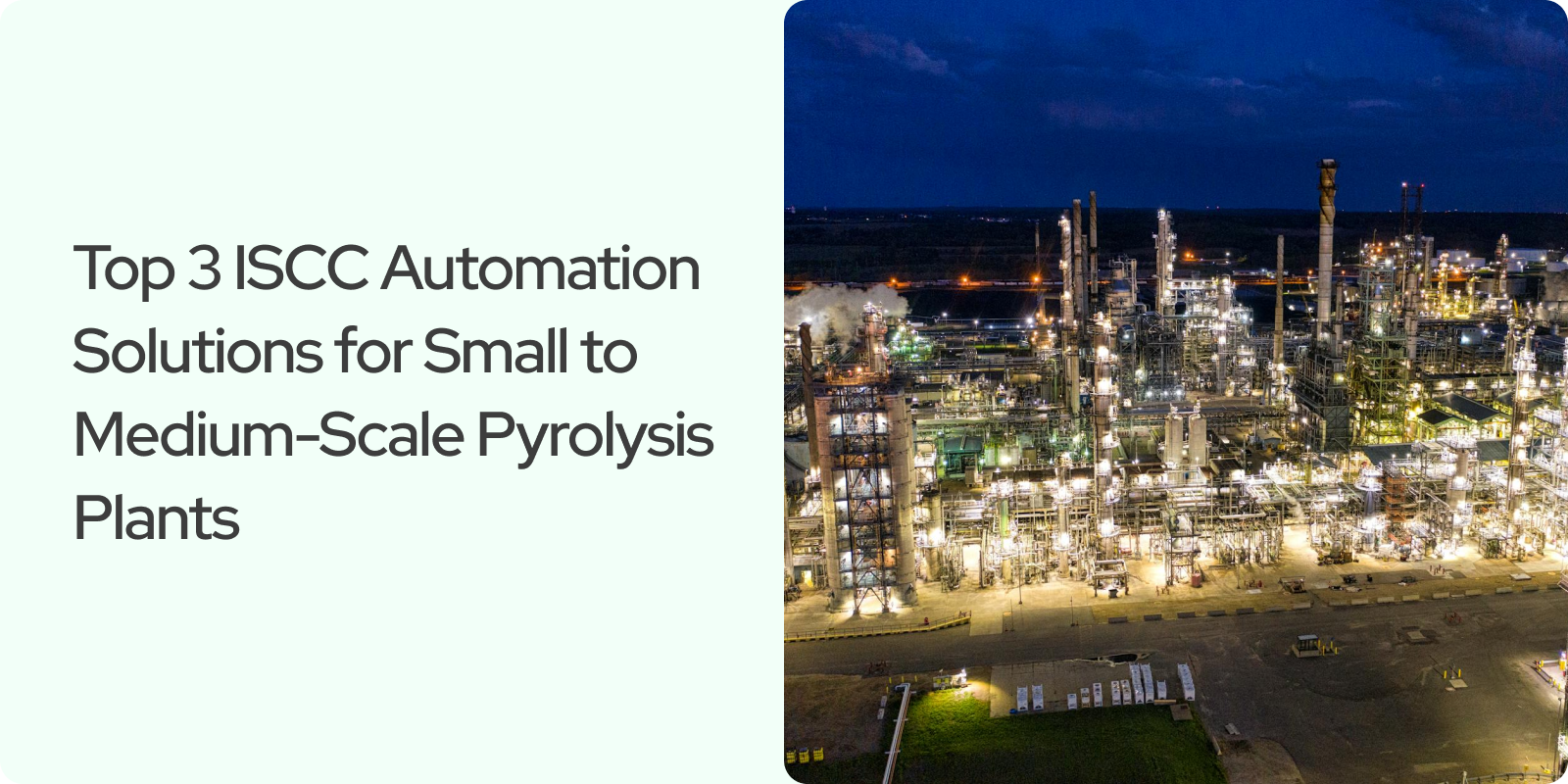
Top 3 ISCC Automation Solutions for Small to Medium-Scale Pyrolysis Plants (2026)
Key takeaways
- The problem: For small and mid-sized pyrolysis plants, ISCC compliance often slows operations because one person handles production, documentation, sustainability, and audit coordination.
- How the tools were ranked: Based on ease of setup, flexibility for small teams, handling of variable yields, audit readiness, and ability to scale without becoming rigid or over-engineered.
- Overall result: Based on these criteria, Carboledger Smart Balance is the most balanced automation solution for small to medium-scale pyrolysis operations.
For small to medium-scale pyrolysis plants, ISCC certification is the license to trade into regulated markets. Without it, commercial growth stalls.
The challenge is that lean teams often manage compliance alongside operations. Whether you are still commissioning your plant or already a few production cycles in, documentation and reconciliation can quickly become overwhelming if the system is too rigid — or too manual.
This article compares the top ISCC automation solutions built for small pyrolysis plants that need flexibility without risking non-compliance.
ISCC for pyrolysis plants: at a glance
- ISCC is the license to trade recycled oils and fuels into regulated markets.
- Most small pyrolysis plants operate with lean teams, where one person handles compliance alongside operations.
- Common bottlenecks: conversion factor management, batch variability, SD issuance delays, and audit preparation.
- Early-stage plants often underestimate how long documentation and reconciliation take.
Whether you are still setting up your plant and waiting for machinery to arrive, or you are several production cycles into certification and realizing compliance is consuming more time than expected, the reality is the same:
If your ISCC system is not structured early, it becomes expensive to fix later.
The tools below are evaluated specifically for small to medium pyrolysis plants, not multinational refiners.
Who this article is for
- Small to mid-sized pyrolysis plants pursuing ISCC PLUS or ISCC EU certification
- Teams where compliance is managed by one or two people
- Operators balancing production scale-up with documentation readiness
How these tools were evaluated
For pyrolysis plants, automation must support production reality:
- Ease of implementation during plant setup
- Handling of variable conversion factors and yields
- Batch-wise traceability of feedstock to output
- SD and PoS generation efficiency
- Flexibility for corrections and adjustments
- Audit readiness and evidence exports
- Pricing suitability for small-scale operators
- Ability to scale as production grows
Comparison of leading ISCC automation tools for small pyrolysis plants
| Rank | Tool | Best suited for | Operational flexibility | Ease for small teams | Scalability | Key limitations |
| 1 | Carboledger Smart Balance | Small plants preparing for certification and scale-up | High | Designed for lean teams | Scales by site | |
| 2 | Circularise | Structured traceability-first setups | Moderate | Structured but rigid | Enterprise-grade | Immutable design can limit adjustments |
| 3 | SAP GreenToken | Large enterprise environments | Low–Moderate | Heavy for small teams | Enterprise-scale | Complex implementation and not tailored for small, variable operations |
1) Carboledger Smart Balance
Best for small teams that need flexibility without losing compliance control
Carboledger Smart Balance supports ISCC mass balance without requiring enterprise-level system complexity.
For pyrolysis plants where conversion yields vary batch to batch and processes evolve during early operations, the system accommodates operational variability while maintaining audit discipline.
Pyrolysis-specific strengths
- Batch-wise tracking of feedstock to pyrolysis oil output
- Support for variable conversion factors
- Automated SD and PoS generation
- Multi-cycle reconciliation without spreadsheet duplication
- Audit-ready reporting exports
- Controlled edit history for adjustments and corrections
- Pricing that scales by site rather than transaction volume
- Pricing that scales by site rather than transaction volume
For lean teams, this balance between flexibility and structure reduces compliance burden without increasing risk.
2) Circularise
Best for structured, traceability-first implementations
Circularise provides ISCC-compliant traceability with a strong emphasis on tamper-resistant records.
For plants seeking rigid structure from the outset, this can create discipline and transparency.
Strengths
- ISCC-compliant reporting
- Audit-ready documentation
- Reduced manual bookkeeping
- Centralised dashboard visibility
- Centralised dashboard visibility
Limitations to consider
Because records are designed to be immutable, adjustments to batch data or SD corrections can be less flexible. For smaller plants still refining processes and conversion factors, this rigidity may introduce operational friction.
3) SAP – SAP GreenToken
Best for large enterprise environments
SAP GreenToken is designed for enterprise-scale environments with established IT infrastructure and structured workflows.
Limitations to consider
- Designed for large, integrated organisations rather than small plants
- Implementation effort and system complexity may outweigh benefits for lean teams
- Less suited for variable, evolving operational setups common in early-stage pyrolysis plants
What ISCC auditors typically review in pyrolysis plants
- Feedstock traceability and classification
- Conversion logic and yield justification
- Batch-level reconciliation
- SD issuance accuracy
- Evidence of corrections and adjustments
Conclusion
For small to medium-scale pyrolysis plants, ISCC certification is the license to trade into regulated markets.
The challenge is implementing compliance discipline without adopting rigid enterprise systems that slow operations. The most suitable automation solution is one that supports operational variability while maintaining audit integrity.
Choosing the right system early — whether during commissioning or early production cycles — prevents costly restructuring later and allows compliance to scale alongside plant growth.
Disclaimer:
Carboledger Inc. is an independent software provider. References to ISCC or any other certification schemes in this article are made solely for informational and educational purposes. Carboledger is not affiliated with, certified by, or endorsed by ISCC System GmbH or any certification body. The content does not constitute certification advice or official guidance.